

Day 2 · Track program

Biosciences, Technology, and Agrosciences

Complete schedule of keynotes, scientific presentations, poster presentations, and parallel sessions across all three tracks.

Date
Thursday, July 16, 2026
Tracks
Biological and Environmental Sciences, IT, and Agrosciences
Formats
In-person, hybrid, and synchronous virtual
Biological and Environmental Sciences Track

Morning session

Registration, track opening, four keynotes, and accepted scientific poster presentations.

Venue
Alfonso Aguilar Ruilova Auditorium
Format
In person with plenary broadcast
Coordination
Coordinators: Dr. Kléver Mendoza Nieto and Dr. Esteban Chirino Miranda
  1. 08:00-09:00

    Participant registration

  2. 09:00-09:30

    Track welcome and opening

    • Comité OrganizadorTrack opening
  3. 09:00-12:00

    Accepted scientific poster presentations

    Poster presentations during the track program.

  4. 09:30-10:15

    Keynote 1: The supposedly extreme El Niño phenomenon and its potential impact on Ecuador's fisheries

    • MSc. José Alio MingoTechnical University of Manabí
  5. 10:15-11:00

    Keynote 2: Dynamics and ecological restoration of forest ecosystems in Tunisia in response to climate change: case studies

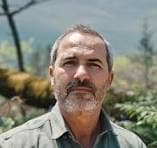
    • Portrait of Issam TouhamiPhD. Issam TouhamiUniversity of Carthage, Tunisia
  6. 11:00-11:30

    Break

  7. 11:30-12:15

    Keynote 3: Growth dynamics of turf algae consortia on abandoned fishing nets in rocky-coral reefs of central Manabí

    • PhD. Juan Figueroa PicoULEAM
  8. 12:15-13:00

    Keynote 4: Land degradation neutrality: options to achieve sustainable development in productive landscapes

    • Portrait of Manuel PeralvoMSc. Manuel PeralvoCONDESAN
  9. 13:00-14:00

    Lunch

Biological and Environmental Sciences Track

Afternoon presentations

Ten-minute presentations followed by five minutes of questions on ecosystems, pollution, restoration, fisheries, and aquatic resources.

Venue
Communications Auditorium - Biology Room 1
Format
Hybrid
  1. 14:00-14:15

    Photochemical degradation of linear low-density polyethylene under environmental and controlled ultraviolet exposure

    • Carlos Reinoso
  2. 14:15-14:30

    Forest restoration in Puerto López canton, Manabí, Ecuador: outreach, intervention, and monitoring

    • Esteban Chirino Miranda
  3. 14:30-14:45

    Prevalence of Clinostomum sp. in Andinoacara rivulatus captured in Pichincha Canton, Manabí, Ecuador

    • Anthony Mera Murillo
  4. 14:45-15:00

    Implementation of a forest development center within the environmental strategy of GAD Manta

    • Iván Murillo Voelcker
  5. 15:00-15:15

    Multitemporal analysis of Pontederia crassipes distribution in Daule-Peripa Reservoir, Ecuador

    • Josué Álvarez
  6. 15:15-15:30

    Toxicity of commonly used pharmaceuticals: an assessment using biological models

    • Dayanara María Macías Mayorga
  7. 15:30-15:45

    Reproductive condition of black shell species in Ecuador

    • Juan Moreno
  8. 15:45-16:00

    Evolution of microorganism growth in a medium contaminated by aluminum, chromium, and lead

    • Abrahán Isaac Velásquez Ferrín
  9. 16:00-16:15

    Biology and fisheries of Ecuador's aquatic resources: marine and inland waters

    • Kléver Mendoza
  10. 16:15-16:30

    Comprehensive assessment of marginal reefs in protected and unprotected areas of Ecuador's coast: progress in the marine ecosystem study

    • David Jesod Mero del Valle
  11. 16:30-16:45

    Development of a sodium alginate-based edible coating to extend the shelf life of corvinilla fillet (Lepophidium negropinna)

    • Eduardo Xavier Pico Lozano
  12. 16:45

    Closing of the track program

Information Technologies Track

Morning session

Keynote and presentations on artificial intelligence, IoT, cybersecurity, precision aquaculture, and enterprise databases.

Venue
Information Technologies virtual room
Format
Synchronous virtual
Coordination
Chair: Ing. Ricardo Aray Aráuz, Mg.
  1. 09:00-09:30

    Keynote I: RAG Engineering: software development with advanced AI implementations

    • Ing. Enrique Aguilar Vargas, PhD.
  2. 09:30-09:45

    Explainable machine-learning classification of banana quality: a perspective for Ecuador's export sector

    • Ing. Roberto Carlos Cobeña
  3. 09:45-10:00

    IoT ULEAM: A Platform for Multidisciplinary Topics

    • Ing. William Zamora Mero, PhD.
  4. 10:00-10:15

    Contingency model for detecting and responding to cyberattacks in Ecuador

    • Ing. Jeremy Intriago Palacios
  5. 10:15-10:30

    Morning break

  6. 10:30-10:45

    Laboratory precision aquaculture: a low-cost IoT system for continuous water-quality monitoring in shrimp farming

    • Ing. Mike Machuca Ávalos, Mg.
  7. 10:45-11:00

    Integration of MCP and LLM for conversational queries in enterprise databases

    • Ing. Josselyn Gómez Bravo, Mg.
  8. 11:00-11:15

    Systematic analysis of electronic citizen participation in universities

    • Ing. David Vilañez
Agrosciences Track

Afternoon session

Presentations on climate mitigation, green finance, food innovation, and economic competition.

Venue
Alfonso Aguilar Ruilova Auditorium
Format
In person
Coordination
Moderator: Ing. Aldo Mendoza
  1. 14:00-14:40

    Carbon sequestration and greenhouse-gas mitigation in agricultural systems

    • Portrait of Gerardo Antonio Pámanes-CarrascoDr. Gerardo Pámanes-CarrascoInstitute of Forestry and Wood Industry, Mexico
  2. 14:40-15:20

    Green bonds

    • Ing. Carlo Magno DelgadoULEAM
  3. 15:20-16:00

    Freeze-dried fruit dragées

    • Portrait of Sahian Macías ZambranoIng. Sahian Macías ZambranoKARANA HEF S.A.S.
  4. 16:00-16:40

    Challenges and importance of economic competition

    • Portrait of David Segovia AraujoEco. David Segovia AraujoGeneral Technical Superintendent, Superintendency of Economic Competition of Ecuador
  5. 16:40-17:20

    Presentation to be confirmed

    • Ministerio de AgriculturaMinistry of Agriculture
Information Technologies Track

Afternoon session

Keynote and presentations on financial fraud, inventory systems, robotics, data science, and DevSecOps.

Venue
Information Technologies virtual room
Format
Synchronous virtual
Coordination
Chair: Ing. Adriana Macías Espinales, Mg.
  1. 15:00-15:30

    Keynote II

    Afternoon keynote.

    • Ing. Miguel Botto Tobar, PhD.
  2. 15:30-15:45

    Explainable Ensemble Learning Framework for Real-Time Financial Fraud Detection

    • Ing. Bhuthamekala Prasanthi
  3. 15:45-16:00

    Web application for inventory management at the Eastern Pacific Fishing School

    • Ing. Jerick Bailon Quijije
  4. 16:00-16:15

    Robotic application to improve oxygen levels in shrimp ponds

    • Ing. Bryan Macías Alcívar
  5. 16:15-16:30

    Afternoon break

  6. 16:30-16:45

    Applying AI and data science to predict and optimize processes using statistical methods

    • Srta. Brittany García Peñarrieta
  7. 16:45-17:00

    DevSecOps-based pedagogical proposal to strengthen secure development skills in software engineering students

    • Ing. Sandra Soledispa Pereira, Mg.
Profiles

Speakers

Portrait of Issam Touhami

PhD. Issam Touhami

Biological and Environmental Sciences track keynote speaker

University of Carthage and National Research Institute of Rural Engineering, Water and Forestry (INRGREF), Tunisia

Biography

Issam Touhami is a forest ecology researcher at Tunisia's National Research Institute of Rural Engineering, Water and Forestry (INRGREF). He holds two master's degrees, one from the Mediterranean Agronomic Institute of Zaragoza and another from the University of Alicante, where he also earned a PhD in Environmental Sciences.

His research focuses on forest adaptation to climate change, forest resource conservation, and the restoration of Mediterranean ecosystems. He has contributed as a leader and team member to national and international projects including MedFireWise, ResAlliance, WildFood, ECOPLANTMED, and MENFRI.

Dynamics and ecological restoration of forest ecosystems in Tunisia in response to climate change: case studies

Climate disturbances pose an increasing threat to the stability of Mediterranean ecosystems, making it necessary to adopt a multidisciplinary approach that combines advanced spatial assessment tools with applied conservation strategies. This approach enables the evaluation of ecological vulnerability and supports effective restoration actions in degraded habitats. The methodology is based on monitoring forest vegetation dynamics through MODIS-NDVI time-series analysis and Land Surface Phenology (LSP) techniques. These tools make it possible to detect changes in vegetation activity and assess ecosystem responses to climatic anomalies. Particular attention is given to prolonged droughts, one of the main environmental stressors because of their impact on ecosystem productivity, vegetation decline, and increased forest mortality. Based on these assessments, ecological restoration strategies focus on conserving and using native species adapted to local environmental conditions. Integrating remote sensing with water-stress analysis facilitates the identification and mapping of the most vulnerable areas, allowing restoration efforts to be prioritized and resources to be managed more efficiently. Overall, the results provide a scientific basis for selecting climate-resilient native flora and promote the transfer of knowledge to sustainable forest management, contributing to the conservation of Mediterranean ecosystems and efforts to mitigate the impacts of global environmental change.

Keywords: Land Surface Phenology (LSP), MODIS-NDVI, native species, ecological restoration, Tunisia
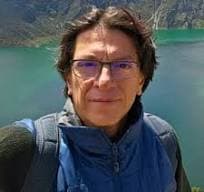

Portrait of Manuel Peralvo

MSc. Manuel Peralvo

Biological and Environmental Sciences track keynote speaker

Consortium for the Sustainable Development of the Andean Ecoregion (CONDESAN)

Biography

Manuel Peralvo is a geographer specializing in socio-environmental systems, environmental modeling for decision support, and the integration of sustainable territorial management tools into environmental governance processes at multiple scales.

He has 25 years of experience in the Andean region, where he has implemented sustainable development and research initiatives that integrate natural and social sciences with sustainable land management, land-use planning, socio-environmental monitoring, and ecosystem conservation and restoration in the context of climate change.

He currently coordinates Ecuador's Land Degradation Neutrality Project, a collaborative initiative involving the Ministry of Environment and Energy, the Ministry of Agriculture and Livestock, FAO, and CONDESAN.

Land degradation neutrality: options to achieve sustainable development in productive landscapes

Land degradation threatens ecosystem health, food security, and the well-being of local communities in the short and long term. Driven by diverse underlying and direct causes, the loss and degradation of the land resource base interact with other global challenges such as climate change and compromise the possibility of achieving sustainable development goals. Sustainable land management is an integrated approach that seeks to preserve ecosystems, mitigate the impacts of land use, and restore degraded lands. It requires a solid basis of integrated land-use planning, governance, scientific knowledge, sustainable production practices, and incentives that support widespread, long-term adoption. Land Degradation Neutrality promotes sustainable transitions in which negative impacts are balanced by actions that avoid, mitigate, and reverse degradation processes. The Land Degradation Neutrality Project implements proofs of concept for this approach, seeks to identify key elements for its implementation in Ecuador, and contributes to knowledge generation and public policy processes.

Keywords: Sustainable land management, governance, monitoring, land degradation

Portrait of Gerardo Antonio Pámanes-Carrasco

Dr. Gerardo Antonio Pámanes-Carrasco

Agrosciences track speaker

Institute of Forestry and Wood Industry, Mexico

Portrait of Sahian Macías Zambrano

Ing. Sahian Macías Zambrano

Agrosciences track speaker

KARANA HEF S.A.S.

Portrait of David Segovia Araujo

Eco. David Segovia Araujo

Agrosciences track speaker

Superintendency of Economic Competition of Ecuador